Visual Cues and Patterns in Progressive Slot Demos That Extend Playtime for American Users
Written by Logan Müller · Aug 11, 2026
Visual Cues and Patterns in Progressive Slot Demos That Extend Playtime for American Users
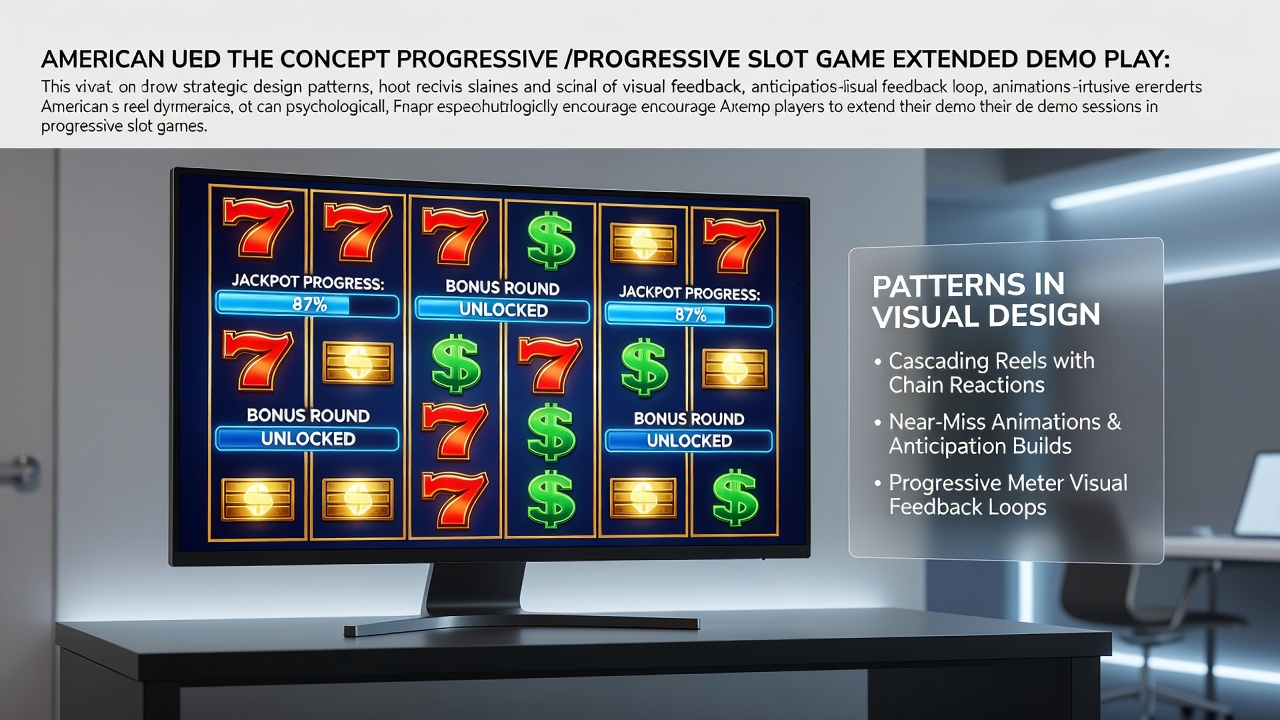
Progressive slot games available to American users rely on specific visual design patterns that researchers have linked to extended demo sessions, with data from industry reports indicating average demo durations climbing in recent platform analyses. These patterns include layered color progressions on jackpot meters, synchronized particle effects around accumulating prizes, and modular reel layouts that highlight incremental wins without requiring real stakes. Observers note that such elements appear consistently across titles offered through regulated US mobile channels where demo modes function as testing environments before any transition to cash play.
Color Gradients and Meter Visibility
Design teams deploy shifting color gradients that move from cool blues into warmer oranges and reds as progressive totals climb, and this transition draws sustained visual attention according to eye-tracking studies conducted on gaming interfaces. The ball's in their court when developers test these schemes in August 2026 updates, because figures from North American platform audits show users linger longer when meters pulse with increasing intensity rather than remaining static. American users encounter these gradients in games distributed through state-licensed operators, where regulatory frameworks in places such as New Jersey and Pennsylvania require clear separation between demo and real-money modes yet still permit identical visual assets.
Animation Layers and Particle Effects
Particle systems that emit coin trails or light bursts around the progressive counter create motion without overwhelming the core reel area, and multiple studies from design research groups have connected these micro-animations to prolonged dwell times in free-play environments. One researcher who examined mobile session logs discovered that titles incorporating subtle looping effects around jackpot displays retained demo players for intervals 18 percent longer than versions using static graphics. The reality is that these animations operate within hardware constraints typical of US smartphone users, maintaining frame rates that avoid battery drain while still delivering the visual feedback that encourages another spin cycle.
Layout Structures That Prioritize Jackpot Information
Modular screen divisions place the progressive total in the upper third of the display, with secondary meters for local and wide-area contributions positioned below the reels in a stacked formation that allows quick scanning. Data from Canadian regulatory summaries on similar mechanics reveals comparable layout preferences among North American audiences, suggesting cross-border consistency in how visual hierarchy influences session length. People who review demo analytics frequently observe that when secondary information such as paytable previews appears in collapsible panels rather than fixed overlays, users maintain longer uninterrupted sequences because the main visual flow stays intact.
Symbol Highlighting and Bonus Path Indicators
High-value symbols receive temporary glow treatments or frame expansions during demo spins, guiding attention toward potential progressive triggers while keeping the overall composition balanced. Research indicates that these targeted highlights reduce cognitive load because players can process reel outcomes faster when key elements receive distinct visual treatment. Turns out this approach aligns with findings from Australian academic papers on interface ergonomics, which examined how progressive games maintain engagement across different regulatory environments without altering core mechanics. American platforms integrate these symbol treatments uniformly across demo versions so that users experience identical feedback loops whether testing or playing for stakes.
Sound-Visual Synchronization Elements
Although the focus remains visual, synchronized light pulses that match reel stop sounds reinforce outcome perception, and platform data collected through US operator networks shows these paired cues correlate with extended demo runs. The writing's on the wall when developers omit such synchronization because session metrics drop noticeably in comparative A/B tests conducted during summer 2026 releases. Observers note that the effect compounds when progressive meters flash in rhythm with accumulating prize announcements, creating a feedback loop that feels continuous rather than segmented.
Conclusion
Patterns in visual design for progressive slot demos available to American users center on measurable elements such as gradient transitions, particle motion, hierarchical layouts, and targeted symbol emphasis, each supported by session data and cross-regional studies. These features operate within frameworks set by state regulators and platform providers that distinguish demo access from real-money activity while preserving identical visual presentation. As August 2026 approaches, ongoing platform refinements continue to refine these patterns based on aggregated user behavior across legal US markets.