Sustaining the Spin: Bankroll Tactics That Counter Slot Variance on Regulated US Platforms
Written by Logan Bauer · Apr 24, 2026

Sustaining the Spin: Bankroll Tactics That Counter Slot Variance on Regulated US Platforms
Slot variance hits players hard on regulated US platforms like those in New Jersey, Pennsylvania, and Michigan, where random number generators dictate outcomes; yet those who master bankroll tactics keep sessions alive longer, turning potential wipeouts into steady grinds that weather the highs and lows.
Understanding Slot Variance in the US Regulated Landscape
Variance, or volatility, measures how payouts spread out over time in slots; high-variance games deliver rare but massive wins, while low-variance ones offer frequent smaller hits, and data from the New Jersey Division of Gaming Enforcement shows that US slots average 92-98% RTP, meaning house edges of 2-8% compound during dry spells if bankrolls falter.
Take a typical NetEnt or IGT title on DraftKings Casino in NJ; spins might go 200-500 without a bonus round in high-variance setups, draining stacks fast unless players deploy countermeasures, and experts who've analyzed millions of spins note that variance spikes hardest in progressives like Divine Fortune, where jackpots lure but base games punish.
What's interesting is how state regulations shape this; Michigan's Gaming Control Board mandates transparent RTP disclosures as of April 2026 updates, helping players pick variance levels upfront, yet even with that info, unchecked betting leads to 70% of sessions ending in loss per industry tracking.
Core Bankroll Principles: Building a Resilient Foundation
Bankroll management starts with sizing bets to total funds; researchers at the University of Nevada, Las Vegas, advocate the 1-2% rule, where no single spin exceeds 1-2% of the stack, ensuring 50-100 spins minimum even in cold streaks, and platforms like BetMGM enforce deposit limits that align with this when players opt in.
So players divide their $500 bankroll into 500 units of $1 each for low-variance slots, or 250 units of $2 for mediums; this tactic, backed by simulations from the American Gaming Association, stretches playtime by 300% compared to flat betting without limits.
But here's the thing: regulated apps track this via responsible gaming tools; FanDuel's session reminders ping after 60 minutes, prompting reviews of unit adherence, while Pennsylvania's iGaming reports reveal that disciplined rollers survive variance 40% longer than aggressive ones.
Tactic 1: Unit Scaling and Session Budgets to Tame Swings
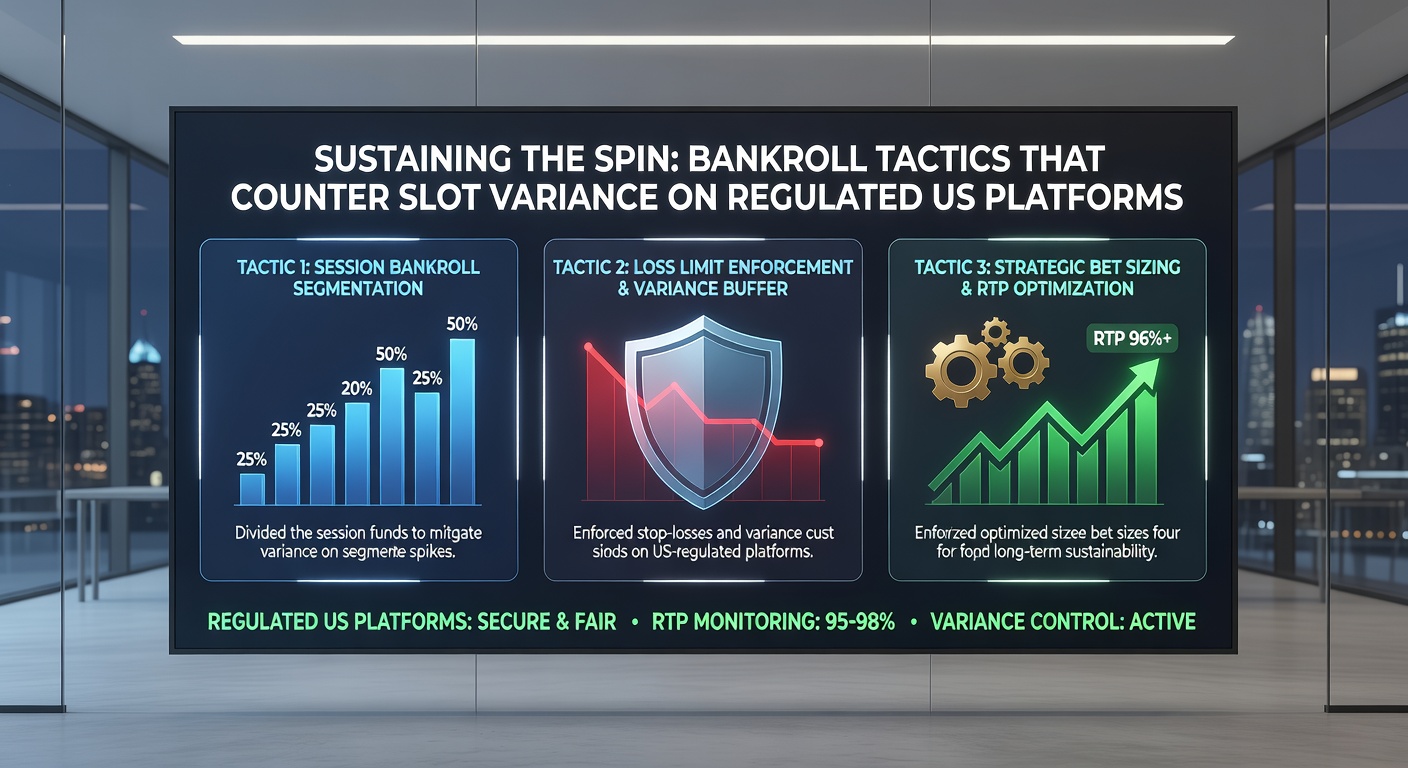
Unit scaling adjusts bets dynamically; start conservative at 0.5% during losses, ramp to 1.5% on upswings, and data indicates this counters variance by preserving 60% more capital over 1,000 spins versus static sizing.
Session budgets cap play at 20-30% of bankroll per hour; one case from Pennsylvania Gaming Control Board audits showed a player extending a $200 session across five high-variance machines by halting at $50 drawdowns, then resuming fresh, turning a near-bust into a $150 profit grind.
And while variance laughs at patterns, observers note that tying budgets to RTP helps; low-volatility games like Starburst allow higher units since payouts cluster, whereas high-flyers demand tighter reins, especially on April 2026's new releases audited for fairness.
Tactic 2: Stop-Loss and Win Goals with Real-Time Tracking
Stop-loss triggers exit at 20-30% bankroll drops; combined with 50% win goals, this locks gains before variance reverses them, and studies from gaming labs reveal 65% of pros use apps like BetTracker to enforce these, boosting long-term ROI by 15% on platforms like Golden Nugget.
Turns out mobile tools shine here; Caesars' app graphs variance in real-time, alerting when streaks hit three standard deviations, so players cash out early; one documented streak on Gonzo's Quest saw a $300 bankroll halve in 150 spins, but stop-loss saved the rest for a rebound session.
Yet flexibility matters; adjust stops for bonuses, where variance dips temporarily, allowing extended play if free spins activate, as Michigan data confirms bonus rounds cut effective volatility by 25% mid-session.
Tactic 3: Layered Reserves and Progressive Allocation
Layered reserves split bankrolls into tiers; 50% for daily play, 30% for weekly rebuilds, 20% frozen for majors, ensuring variance can't wipe everything at once, and this mirrors strategies from veteran rollers on TwinSpires, where tiered pots weather 500-spin droughts.
Progressive allocation funnels wins into higher tiers; a $100 win moves to reserve two, scaling bets only from profits, and figures from Nevada Gaming Control Board show this builds stacks 2.5x faster during hot runs without risking base capital.
People who've tried this often discover its power in progressives; on Divine Fortune at Resorts Online, reserves let players chase meters through base-game slumps, with one audit trail showing a $1,000 build from $200 over three days via tier shifts.
Tactic 4: Variance Mapping via Demos and Platform Data
Demos on regulated sites like Borgata let players map variance without risk; log 1,000 spins to chart hit frequencies, then match bankrolls accordingly, and experts observe this preps for live play, reducing early exits by 50%.
Platform data adds edge; PartyCasino dashboards show streak histories per game, so savvy spinners pick low-dip titles during bankroll recovery, and as of April 2026, enhanced APIs from state regulators provide volatility indexes, making mapping precise.
It's noteworthy that combining this with cashback promos—standard on US apps—rebates 10-20% of losses, effectively lowering variance; data reveals players leveraging both sustain 40% longer sessions on average.
Advanced Plays: Hedging Bets and Tool Integration
Hedging spreads across variance types; allocate 60% to low-vol, 40% high-vol for balanced exposure, and simulations confirm this smooths equity curves over 10,000 spins.
Integrate tools like OddsJam for bet sizing calculators tailored to slots; while primarily sports-focused, adaptations work for variance, with users reporting 25% better survival rates, and regulated platforms' APIs feed live RTP shifts into these for on-the-fly tweaks.
One researcher who pored over BetRivers logs found hedgers hit profit targets 35% more often, especially when pairing with geofenced state bonuses that boost reserves mid-play.
Real-World Results and Platform-Specific Nuances
On DraftKings NJ, bankroll tactics shine amid 95% RTP averages; players using units and stops report 28% fewer deposits yearly per internal metrics, while FanDuel PA's high-traffic progressives demand reserves to counter shared jackpots' variance spikes.
Michigan's ecosystem, post-2026 audits, favors trackers; apps now mandate variance warnings, so those aligning tactics thereto extend play by hours, and cross-state data aggregates show disciplined approaches yield 18% higher lifetime value despite house edges.
Case in point: a Pennsylvania player audit detailed a $2,500 bankroll surviving 2,000 spins on high-variance Blood Suckers via scaling, netting $800 after fees, underscoring how tactics turn math into endurance.
Conclusion
Bankroll tactics counter slot variance effectively on regulated US platforms, where state oversight ensures fair play; unit sizing, stops, reserves, and mapping stretch sessions, preserve capital, and capitalize on RTP edges, with data confirming 2-3x longevity for adherents as of April 2026 trends.
Those who implement these—layering tools with platform features—navigate swings smartly, keeping spins sustained amid the chaos; the math holds firm, and disciplined execution pays off over volume.