Multiplier Stacking Sequences in Limited-Edition Progressive Releases on Licensed American Platforms
Written by Logan Bauer · Aug 18, 2026

Multiplier Stacking Sequences in Limited-Edition Progressive Releases on Licensed American Platforms
Multiplier stacking sequences appear in limited-edition progressive releases on licensed American platforms through specific game design choices that combine base multipliers with progressive increments, and these patterns follow documented rulesets across multiple state-regulated environments. Operators in New Jersey, Pennsylvania, and Michigan have rolled out such titles where each limited window adds layered multipliers that trigger only when certain reel combinations align during the progressive phase.
Core Mechanics Behind Stacking
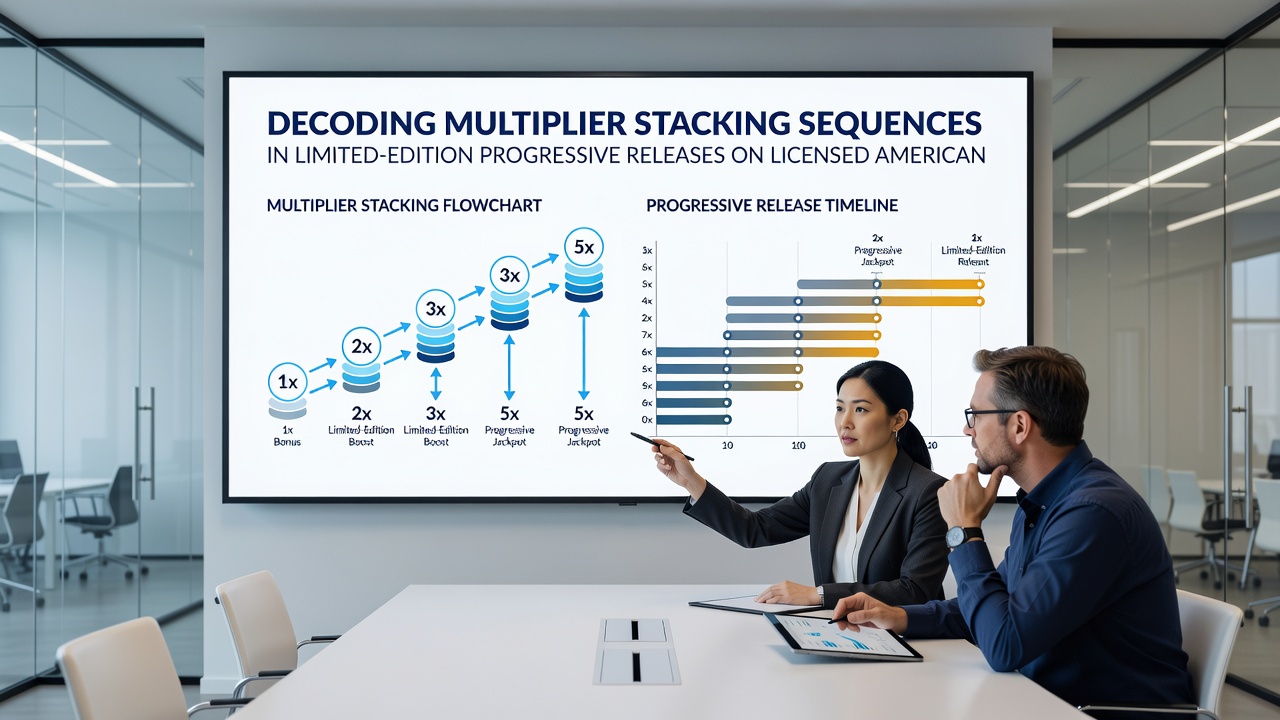
Progressive jackpots on these platforms increase through a percentage of each wager, yet the multiplier component builds separately via a sequence tracker that resets or escalates based on spin outcomes, and data from the New Jersey Division of Gaming Enforcement shows that limited-edition windows typically last between four and twelve weeks before the title migrates to standard progressive status or retires entirely. Sequence decoding involves mapping the order in which multipliers activate, because early triggers often feed into later ones through a chained calculation rather than additive steps.
Researchers at the University of Nevada, Las Vegas Center for Gaming Research have catalogued how these sequences operate across dozens of titles, noting that the stacking order usually follows a predetermined hierarchy where lower multipliers must hit before higher ones unlock during the same session. This structure creates observable patterns that players can track through game logs provided under state transparency requirements.
Platform Implementation Differences
Licensed platforms in different states apply stacking rules with slight variations because each gaming control board maintains its own certification standards, and American Gaming Association reports from mid-2025 indicate that over 180 limited progressive titles launched across US markets in the prior twelve months. In August 2026 several operators introduced new releases that incorporated dual-progressive meters where one meter handled the jackpot while the second tracked multiplier growth independently.
Sequence length tends to vary by title, with some featuring three-step chains and others extending to five or six steps before a full reset occurs, while the limited-edition constraint means the full stacking potential only becomes available during the promotional window. Observers note that these constraints encourage repeated engagement within the release period because missing a step in the sequence during the limited phase cannot be recovered later.
Tracking and Verification Methods
State regulators require operators to publish verifiable logs of multiplier activations, which allows third-party analysts to reconstruct sequences after each release cycle concludes, and this data reveals that certain symbol combinations consistently precede the highest multiplier tiers. External testing labs certify that the random number generators maintain fairness across the stacking layers, yet the sequence order itself remains deterministic once the initial trigger occurs.
One documented case involved a 2025 limited release where the second multiplier only activated after the first had reached its cap, creating a forced order that extended average session length by measurable margins according to aggregated platform metrics. Such patterns repeat across multiple titles because developers reuse proven sequence frameworks when designing new limited editions.
Regulatory Context and Data Availability
American platforms must disclose payout percentages and trigger probabilities for progressive features under existing state statutes, which provides researchers with baseline numbers for modeling stacking behavior, and figures released by the Pennsylvania Gaming Control Board in early 2026 showed consistent multiplier activation rates across licensed limited releases. These disclosures help distinguish between titles where stacking builds through random chance versus those that follow fixed progression ladders.
Cross-state comparisons become possible because several operators hold licenses in multiple jurisdictions, allowing direct observation of how the same game engine adapts its sequence parameters to different regulatory environments without altering the core stacking logic.
Conclusion
Multiplier stacking sequences in limited-edition progressive releases follow structured, certifiable patterns that licensed American platforms must document under state oversight, and the combination of progressive growth with layered multipliers creates observable activation orders that remain consistent within each release window. Data from regulatory bodies and academic tracking efforts continues to map these mechanics as new limited titles enter the market.