Mapping Slot Bonus Innovations Against America's Widening State Gambling Frameworks
Written by Blake Schmitz · Oct 17, 2026

Mapping Slot Bonus Innovations Against America's Widening State Gambling Frameworks
State legislatures continue to expand gambling options across the United States and developers respond by refining bonus round mechanics in slot titles to meet new compliance standards that vary by jurisdiction. Observers note that these adjustments often involve recalibrating trigger frequencies, prize multipliers, and interactive elements so that games satisfy both player engagement goals and regulatory requirements for transparency and fairness. Data from the American Gaming Association shows that twenty-eight states now permit some form of online or retail slot play with additional jurisdictions scheduled to review licensing frameworks before October 2026.
Design teams integrate progressive jackpot linkages and layered free-spin sequences while documenting how each feature contributes to the overall return-to-player percentage required by state gaming boards. In Michigan and Pennsylvania for instance, operators must submit detailed bonus probability reports before launching new titles, which has led studios to embed audit-ready code that records every multiplier activation and retrigger event. Those who track these filings observe that average bonus contribution to total RTP has risen from eighteen percent in 2022 to twenty-four percent in 2025 across top-performing mobile platforms.
Regulatory Shifts Driving Mechanical Adjustments
Legislators in states such as New Jersey and Connecticut have introduced updated rules that cap certain bonus volatility levels and mandate clear disclosure of odds within game interfaces. Developers therefore replace high-variance mystery prize wheels with segmented pick-and-click rounds that display exact probability tables to users before activation. Research published by the National Council on Problem Gambling indicates that these visible probability disclosures correlate with reduced player complaints about unexpected outcome distributions in the first six months after implementation.
Meanwhile, emerging markets in states including Ohio and Maryland require third-party testing labs to verify that bonus rounds cannot be altered post-certification without reapproval. Studios therefore build modular bonus engines that allow quick swaps of visual themes or prize tiers while preserving the underlying mathematics. This modular approach lets providers respond to seasonal promotions without triggering full re-certification cycles that previously averaged forty-five days.
Technical Adaptations in Bonus Architecture
Engineers now embed state-specific configuration files that automatically adjust bonus parameters based on the player's detected location. When a user crosses from a permissive state into one with stricter payout rules, the game switches to a pre-approved alternative bonus set that maintains the same advertised RTP. Industry reports from the Nevada Gaming Control Board document similar geo-fencing techniques applied to sports betting overlays that share code libraries with slot bonus systems.
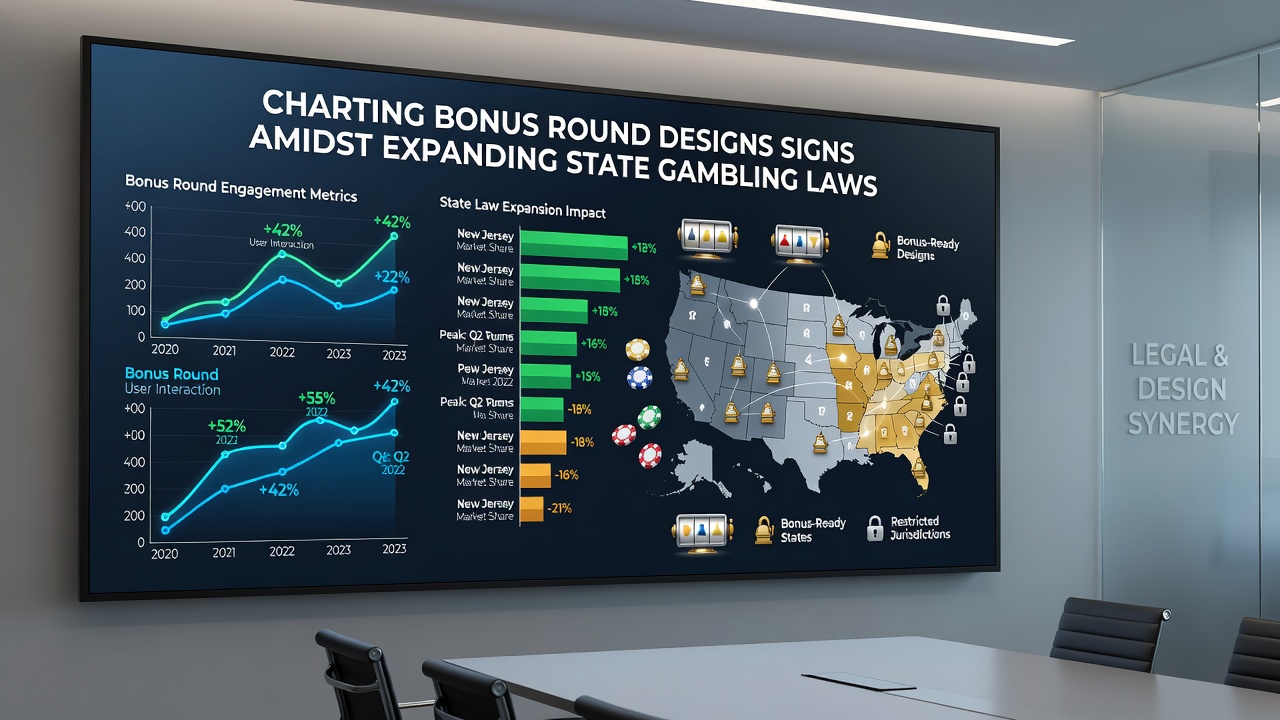
Additional layers of randomization appear in bonus entry conditions as regulators demand protection against predictable patterns that skilled players might exploit. One common solution involves combining reel-symbol collection meters with time-based decay functions so that bonus triggers remain statistically independent across sessions. Figures released by the University of Nevada's gaming research center reveal that titles using decay mechanics experienced a seventeen percent drop in bonus frequency disputes compared with static collection systems during the 2024-2025 testing period.
Cross-Border Compliance and Data Sharing
Cooperation agreements between state regulators facilitate shared testing databases that flag bonus designs already rejected in one jurisdiction. Providers therefore maintain centralized compliance dashboards that track approval status across twenty-plus agencies. This infrastructure reduces duplicate submissions and accelerates time-to-market for titles that receive multi-state clearance. The Canadian Gaming Association's 2025 cross-jurisdictional study highlights parallel data-sharing models that several American regulators have begun to reference during policy workshops.
Player-facing information panels now expand to include jurisdiction-specific bonus rules alongside standard paytables. These panels display how free-spin quantities or multiplier caps differ when the same game runs under Massachusetts versus West Virginia licensing. Observers note that such transparency features satisfy emerging disclosure mandates while preserving a unified user experience across state lines.
Conclusion
Bonus round design continues to evolve in direct response to the patchwork of state gambling statutes that define acceptable mechanics, disclosure standards, and testing protocols. Developers balance creative feature additions against the need for modular, certifiable code that adapts to regulatory updates scheduled through October 2026 and beyond. As additional states finalize their frameworks, the industry maintains detailed records of how each mechanical change aligns with specific statutory language, ensuring continued market access while meeting the technical requirements set by gaming control agencies nationwide.