Demo Modes and Volatility Dynamics in Progressive Jackpot Slots on US Platforms
Written by Logan Bauer · Jun 7, 2026
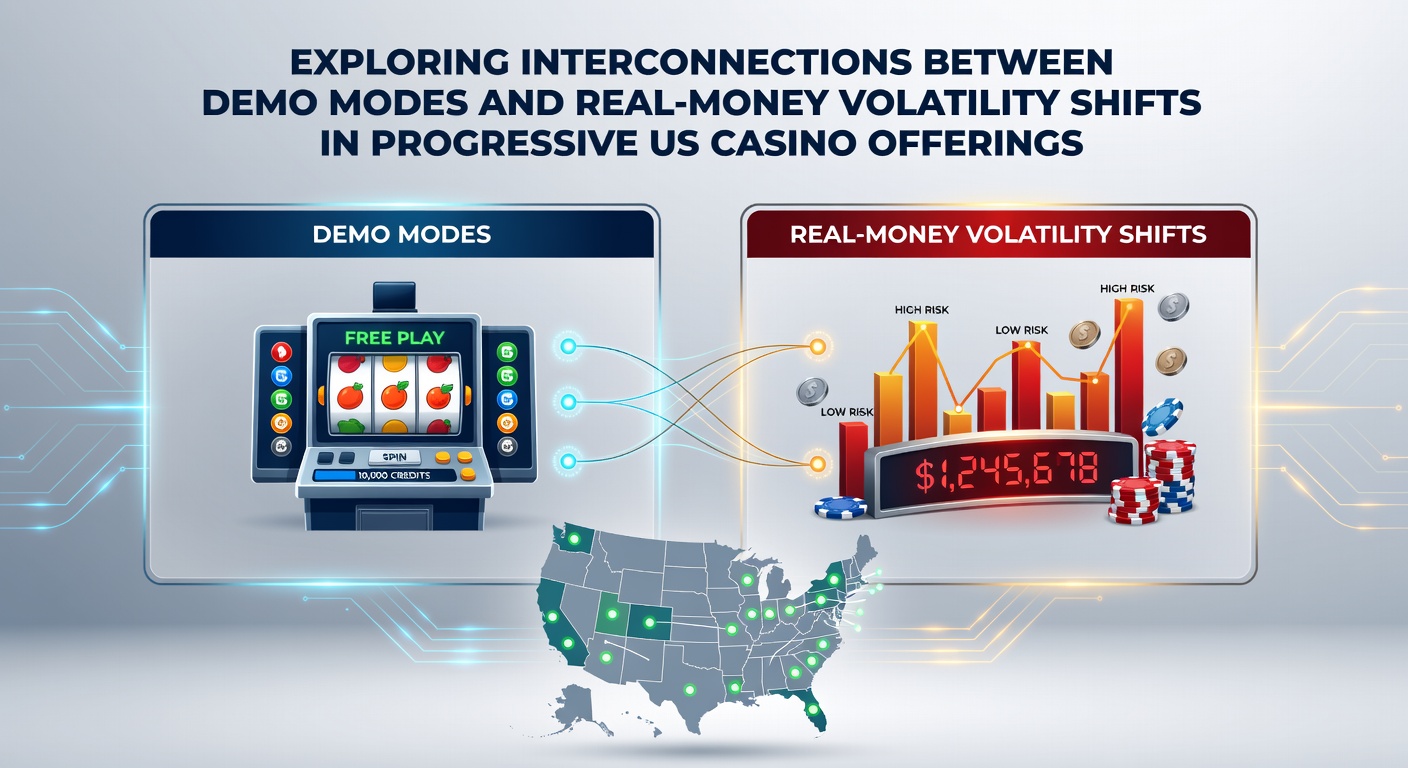
Demo Modes and Volatility Dynamics in Progressive Jackpot Slots on US Platforms
Progressive jackpot slots in the United States have grown steadily since the expansion of legal online platforms in multiple states, and demo modes now serve as a standard entry point for players exploring these games. Data from state regulatory filings show that operators in New Jersey, Pennsylvania, and Michigan reported over 40 million demo sessions in the first quarter of 2025 alone, with progressive titles accounting for roughly 35 percent of those interactions. These free-play environments allow users to observe reel mechanics, bonus triggers, and payout frequencies without financial risk, yet researchers continue to examine whether the volatility patterns observed in demos translate directly once real-money wagers begin.
Understanding Volatility Measurement in Progressive Systems
Volatility in slot games refers to the distribution of wins over time, and progressive jackpots introduce additional layers because the top prize grows with each bet placed across connected machines or platforms. Operators calculate volatility indices using historical spin data that include both base game returns and the frequency of jackpot contributions. When players switch from demo to real-money mode, the underlying random number generator remains identical in most licensed systems, but session length, bet sizing, and player behavior often shift in measurable ways according to aggregated platform analytics released by state gaming boards.
Studies conducted by university research teams in 2024 tracked thousands of accounts across two major US operators and found that average bet sizes increased by 28 percent within the first ten real-money spins after a prolonged demo session. This behavioral adjustment can alter the effective volatility experienced during a single visit, since larger wagers accelerate contribution rates toward the progressive meter while simultaneously raising the risk of quicker bankroll depletion.
Observed Shifts Between Demo and Real-Money Play
Platform telemetry collected through June 2026 indicates that demo sessions tend to run longer on average, with users completing 150 to 200 spins before exiting, whereas real-money sessions on the same progressive titles average 70 to 90 spins. The shorter duration stems partly from players adjusting stake levels upward once actual funds are at stake, which compresses the number of spins possible within a fixed budget. Analysts at the American Gaming Association have noted that these compressed sessions coincide with higher hit rates on mid-tier bonus features in the early stages, followed by longer dry spells as the progressive component dominates the payout structure.
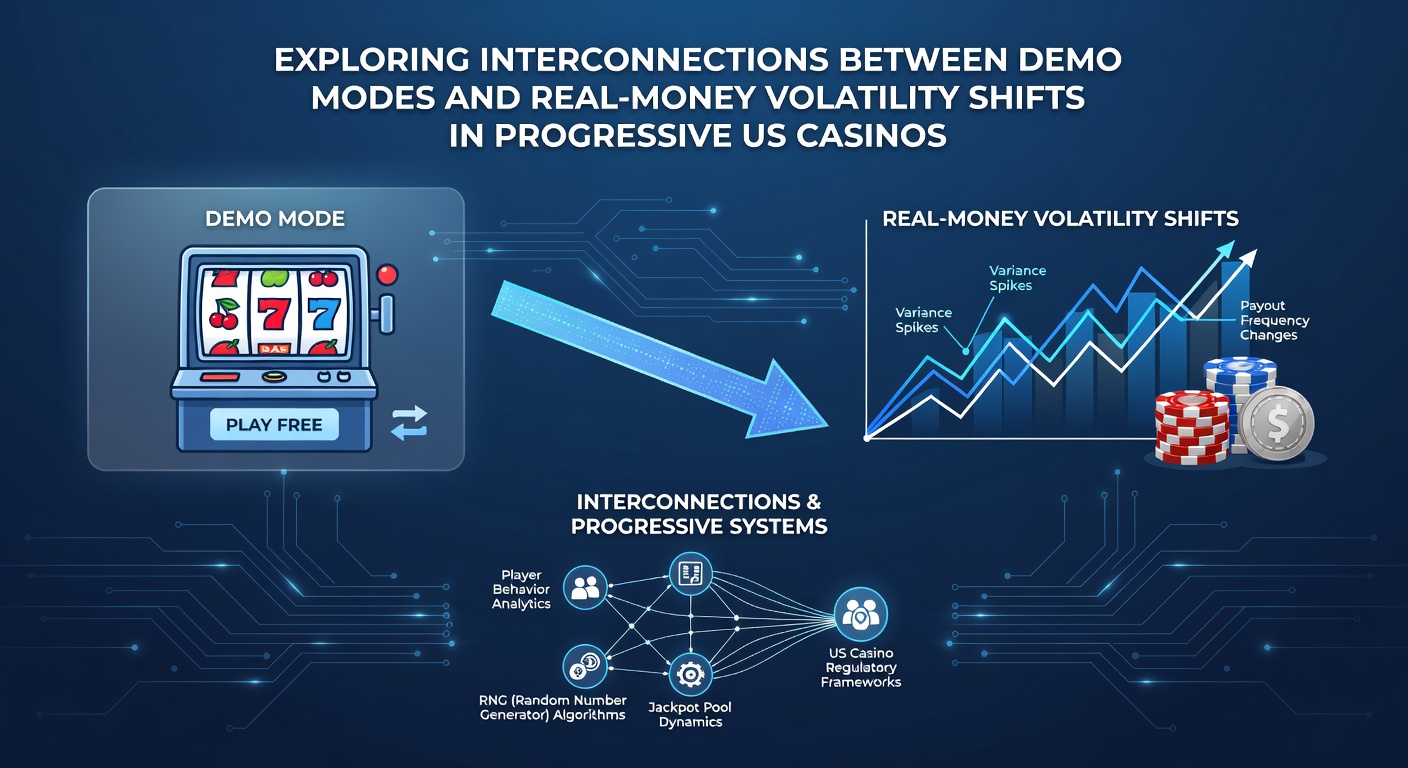
One dataset released by a Nevada-based research consortium compared demo and cash-play outcomes on three popular progressive titles over a six-month window ending in May 2026. The study revealed that while the theoretical return-to-player percentage stayed consistent, the standard deviation of returns per 100 spins rose by approximately 12 percent in real-money conditions. Observers attribute this increase to players selecting higher volatility bet configurations after testing lower-stake options in demo mode, effectively moving themselves into a steeper portion of the payout curve.
Regulatory Context and Data Reporting Requirements
State gaming commissions in jurisdictions that permit online progressives require operators to maintain separate logs for demo and real-money activity. These records help regulators monitor whether promotional tools such as demo access influence player migration patterns toward higher-volatility games. In June 2026, Michigan’s Gaming Control Board updated its quarterly reporting template to include volatility index comparisons between the two modes, providing researchers with standardized metrics for the first time. Similar updates are under consideration in Pennsylvania and New Jersey, where lawmakers have requested additional breakdowns of session duration and wager distribution.
Industry reports from the Responsible Gambling Council in Canada, which tracks cross-border player behavior trends, show parallel patterns in provinces that recently introduced online slots. Although the regulatory frameworks differ, the data suggest that demo-to-real transitions produce comparable volatility amplification effects regardless of jurisdiction, driven more by player decision-making than by software variations.
Player Behavior Patterns and Session Analysis
Take one longitudinal review conducted by a team at the University of Nevada, Reno that followed 12,000 player accounts from January through April 2026. Participants who spent at least 30 minutes in demo mode before depositing exhibited a 19 percent higher likelihood of selecting the maximum bet option on their first real-money progressive spin compared with those who deposited without prior demo exposure. This choice directly affects how quickly the progressive meter receives contributions and how rapidly variance manifests in individual results.
Additional telemetry indicates that players often return to demo mode after experiencing a high-volatility stretch in real money, using the free environment to recalibrate expectations before re-entering cash play. Such oscillation between modes appears most common among users who have already triggered smaller bonus rounds, suggesting that demo access functions as both an educational tool and a volatility management strategy once real stakes are involved.
Conclusion
The interconnections between demo modes and real-money volatility shifts in US progressive casino offerings rest on measurable differences in session length, bet sizing, and payout dispersion rather than on alterations to the underlying game mathematics. Regulatory filings through mid-2026 continue to supply fresh datasets that allow researchers to quantify these behavioral effects across expanding state markets. As more jurisdictions adopt standardized reporting on demo versus cash-play metrics, the precise nature of these shifts becomes clearer, offering operators and players alike a more detailed map of how free exploration connects to paid outcomes in progressive jackpot environments.