Charting Contribution Pathways in Interstate Progressive Jackpot Networks Across American State Regulations
Written by Logan Bauer · Aug 2, 2026
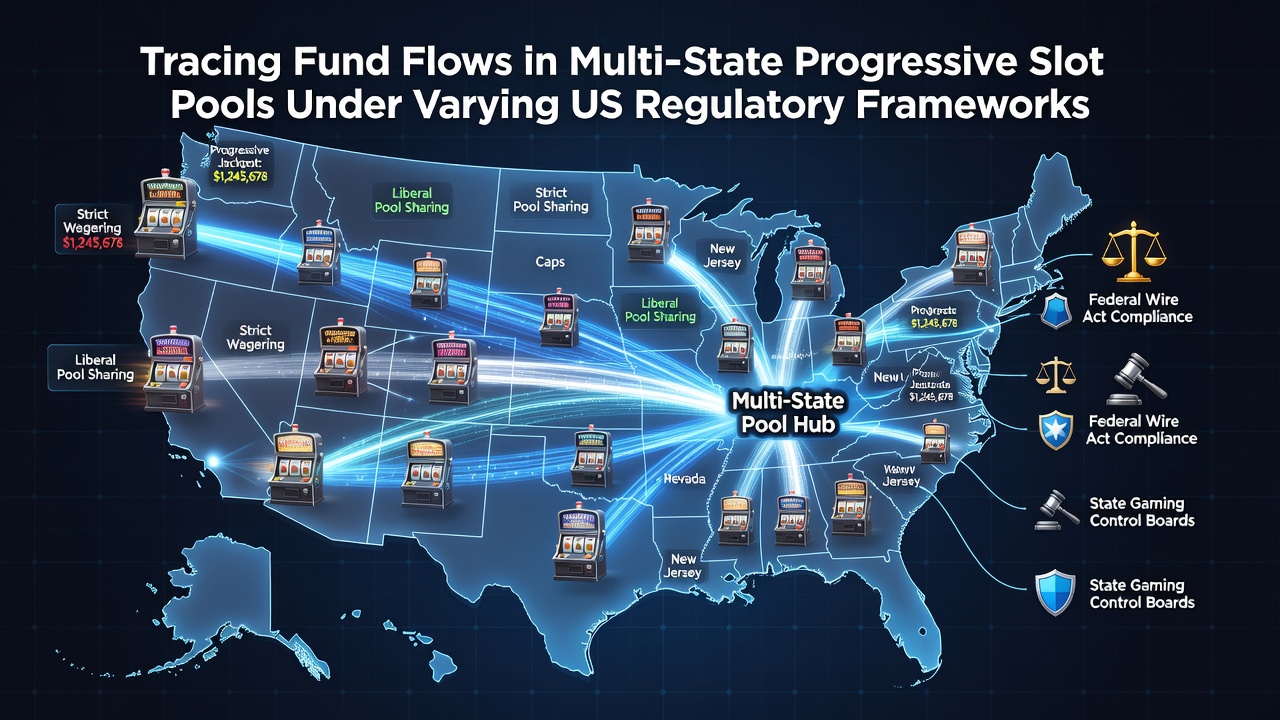
Charting Contribution Pathways in Interstate Progressive Jackpot Networks Across American State Regulations
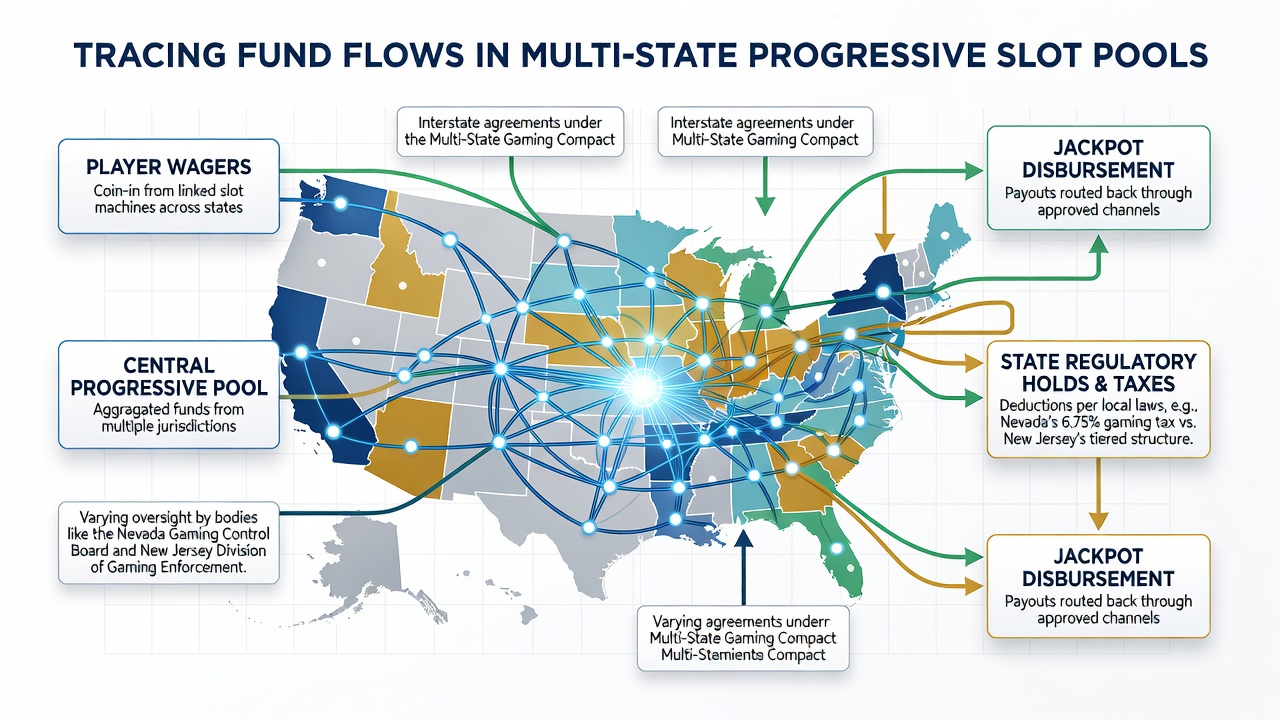
Multi-state progressive slot pools operate by pooling small percentages of wagers from machines located in different jurisdictions into shared jackpot totals, and this structure requires precise tracking mechanisms to comply with each state's distinct rules on revenue allocation and player fund protection. States such as Nevada, New Jersey, and Pennsylvania maintain separate licensing frameworks that dictate how operators must segregate and report contributions, while interstate agreements attempt to harmonize reporting standards without overriding local authority.
Regulatory bodies in these jurisdictions mandate detailed audit trails that follow each contribution from the moment a player places a bet through to the final disbursement of winnings, and operators use centralized software platforms to log every transaction in real time. Data from these systems reveal that contribution rates typically range between 1 and 3 percent of each qualifying wager, with the exact percentage fixed by the specific progressive network and state approval documents.
State-Specific Rules Governing Pool Participation
Nevada's Gaming Control Board requires all progressive contributions to remain within state-approved accounts until a jackpot triggers, whereas New Jersey's Division of Gaming Enforcement permits limited cross-border pooling under strict escrow conditions that demand daily reconciliation reports. Pennsylvania's gaming regulators impose additional layers of oversight that include independent third-party verification of fund transfers between participating casinos, and these differences create layered compliance obligations for any operator running machines across multiple states.
Operators must maintain separate ledgers for each jurisdiction even when the jackpot total appears unified to players, and this separation prevents commingling that could violate state revenue-sharing statutes. Research from industry compliance reports shows that states without formal interstate compacts often require manual reconciliation processes that increase both time and cost for multi-state networks.
Technical Systems Used to Monitor Money Movement
Centralized jackpot controllers collect contribution data through encrypted connections that timestamp every increment and transmit summaries to regulatory servers at intervals specified by each state, while blockchain-based logging solutions have gained traction in several jurisdictions since 2024 as a way to create immutable records. These systems allow auditors to trace a single dollar from a slot machine in Atlantic City through the pool and eventually to a winner in Las Vegas without relying on paper trails that are prone to error.
Automated alerts notify regulators whenever contribution flows deviate from expected patterns, and such deviations trigger immediate reviews that can halt further pooling until discrepancies resolve. Figures released by state gaming agencies indicate that these digital monitoring tools have reduced reconciliation errors by measurable margins across participating properties.
Challenges Emerging in the August 2026 Environment
As of August 2026, several states have updated their reporting frequencies to require near-real-time data feeds rather than end-of-day summaries, and this shift has prompted operators to upgrade their internal systems to handle higher volumes of regulatory queries. Variations in data format requirements between states continue to complicate automated reporting, forcing many networks to maintain parallel compliance modules that translate information into each jurisdiction's preferred structure.
Interstate compacts signed in prior years provide a framework for mutual recognition of audits, yet enforcement still rests with individual state agencies that retain the right to conduct their own examinations at any time. Observers note that networks operating without such compacts face duplicated audit costs that can reach significant percentages of total contribution revenue.
Examples of Compliance in Action
One multi-state progressive network connecting properties in Nevada and New Jersey implemented a unified dashboard that feeds identical data streams to both the Nevada Gaming Control Board and New Jersey regulators, and this approach has allowed faster resolution of any flagged transactions. Another network spanning Pennsylvania and Delaware uses third-party escrow agents to hold contributions until each state completes its verification cycle, a method that satisfies local rules while maintaining the shared jackpot structure.
Studies conducted by university research centers have examined how these varied approaches affect overall pool growth rates, and the findings indicate that states with streamlined reporting tend to see higher participation from operators seeking to minimize administrative overhead.
Conclusion
Tracing fund flows in multi-state progressive slot pools demands continuous adaptation to the patchwork of American state regulations that govern contribution collection, reporting, and disbursement. Operators rely on sophisticated digital tools and interstate agreements to satisfy overlapping requirements, while regulators maintain oversight through increasingly granular data demands. The landscape continues to evolve as new technologies and policy updates reshape how contributions move across state lines.